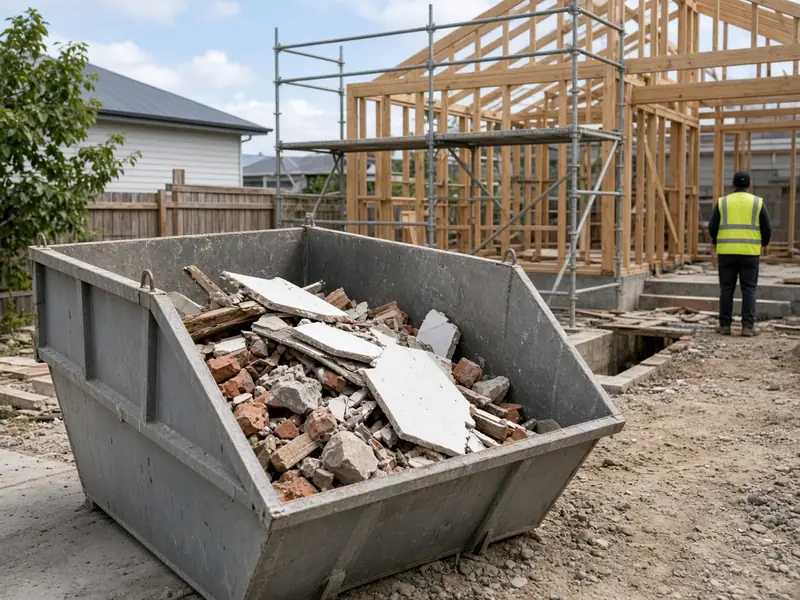
How skip sizes are measured
A skip's size is its volume in cubic metres. One cubic metre is a cube 1 m long, 1 m wide and 1 m high. To make that easier to picture, the table below compares each size with a standard 240-litre household wheelie bin (0.24 m³) and a 6×4 box trailer loaded level with its sides (roughly 1 m³). These are rough comparisons. Bin shapes vary between operators, so we don't quote exact dimensions.
| Size | About | About | Typical Nowra job |
|---|---|---|---|
| 2 m³ | ≈ 8 wheelie bins | ≈ 2 trailer loads | Garage or shed clean-out, a small garden tidy-up, or small amounts of heavy waste such as soil or broken pavers. |
| 3 m³ | ≈ 13 wheelie bins | ≈ 3 trailer loads | A decent backyard clean-up, clearing one or two rooms, or a weekend of pruning. |
| 4 m³ | ≈ 17 wheelie bins | ≈ 4 trailer loads | Bathroom or laundry renovations, old carpet and underlay, or a small house clean-out. |
| 6 m³ | ≈ 25 wheelie bins | ≈ 6 trailer loads | Old cabinets and benchtops, furniture from several rooms, or a large yard clean-up. |
| 8 m³ | ≈ 33 wheelie bins | ≈ 8 trailer loads | Moving house, a deceased estate clean-out, or a medium renovation with mixed building waste. |
| 9 m³ | ≈ 38 wheelie bins | ≈ 9 trailer loads | Bigger renovations, extensions, or a full clean-out with lots of bulky items. |
| 12 m³ | ≈ 50 wheelie bins | ≈ 12 trailer loads | Building sites, demolishing a shed or deck, or large clean-ups. Needs good truck access. |
Wheelie bin figure = size ÷ 0.24 m³, rounded. Not every operator stocks every size.
Choosing the right size
Start with the job, not the bin. Around Nowra, a 2–3 m³ skip handles most garage, shed and small yard clean-ups. A 4 m³ skip suits a bathroom or laundry, and 6 m³ a kitchen or a big garden overhaul. For moving house, a deceased estate or an extension, look at 8–12 m³. Holiday houses at Huskisson, Vincentia or Culburra Beach often fill up with old furniture and bedding, which is bulky but light, so volume matters more than weight.
Pile everything up first if you can. A rough pile 2 m long, 1 m wide and 1 m high is about 2 m³, before any gaps from awkward shapes.
Heavy waste needs a smaller bin
Soil, sand, concrete, bricks, tiles and rock are much heavier than household junk for the same volume. Operators usually limit heavy waste to smaller bins (often 2–4 m³) and may charge for extra weight or ask you not to fill past a line. If you're digging out a garden bed or breaking up a slab, choose "Soil, concrete or bricks" in the form so the quote is based on the right bin.
Some operators also offer skip bags of around 1 m³ for small jobs and tight spaces.
Space and access for the truck
Skip trucks need room to reverse and lift. Check for low power lines, overhanging trees and soft ground, especially on sandy coastal blocks around Jervis Bay and the Bay & Basin after rain. A driveway is the easiest spot. If the only space is the road or nature strip, read our Shoalhaven skip permit guide first.
Not sure? Ask for help
If you can't decide, pick "Not sure, help me choose" in the quote form and describe the job in a sentence. The local operator who quotes you can suggest a size. If you think you're between two sizes, the bigger one is often cheaper than a second bin later, but check the price of both. See also what can and can't go in a skip.
Where this information comes from
Council rules, hours and fees change. Check with the council or facility before you rely on them.